Overview
Before transistors, integrated circuits, and nearly every modern solid-state device, electronic amplification and switching were performed with vacuum tubes. A tube controls the motion of electrons through an evacuated glass or metal envelope. By adding electrodes between an electron-emitting cathode and a collecting plate, engineers learned first to rectify current, then to amplify it, oscillate, switch, detect radio signals, and generate substantial electrical power.
Plate (anode): attracts electrons. Grid: controls their flow. Cathode: emits electrons when heated. Heater / filament: warms the cathode.
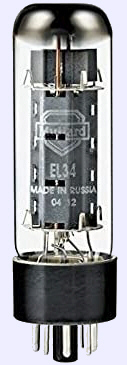 EL34 Vacuum Tube
One example of the glass vacuum tubes used in audio and musical-instrument amplifiers.
EL34 Vacuum Tube
One example of the glass vacuum tubes used in audio and musical-instrument amplifiers.
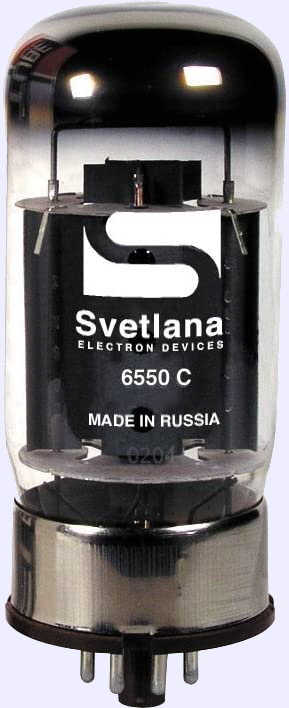 6550 Vacuum Tube
A larger power tube used in audio, musical-instrument, and other high-power applications.
6550 Vacuum Tube
A larger power tube used in audio, musical-instrument, and other high-power applications.
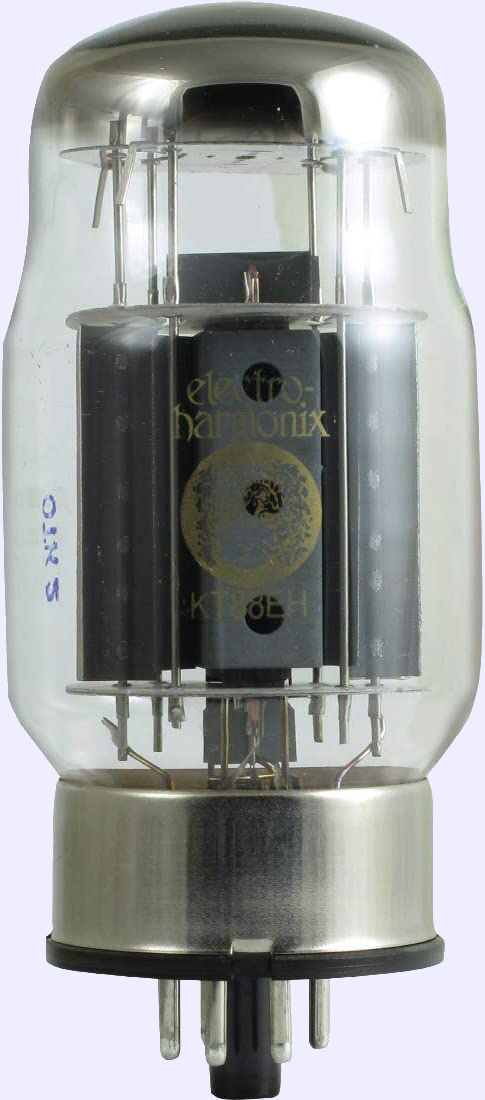 KT88 Vacuum Tube
A high-power tube commonly seen in audio and musical-instrument equipment.
KT88 Vacuum Tube
A high-power tube commonly seen in audio and musical-instrument equipment.
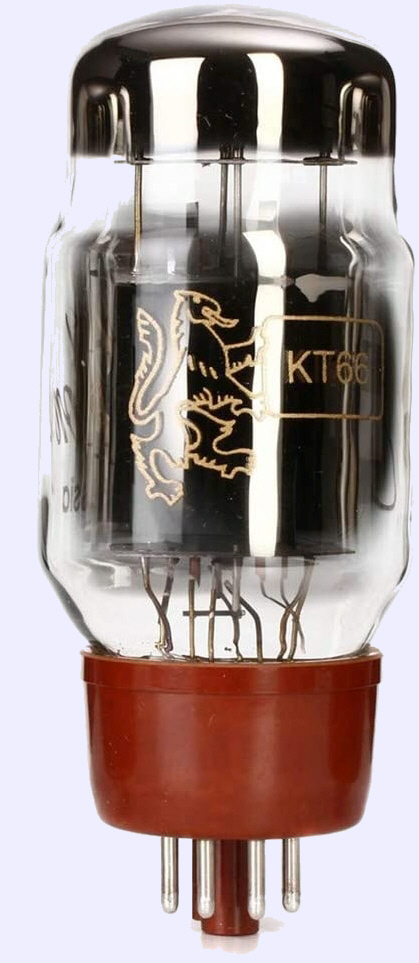 KT66 Vacuum Tube
Related to the 6L6 family, but a distinct tube type.
KT66 Vacuum Tube
Related to the 6L6 family, but a distinct tube type.
Why tubes belong before diodes and transistors
Conceptually, the sequence is remarkably clean:
- Incandescent lamp: a hot filament in a vacuum emits electrons.
- Vacuum diode: a second electrode collects those electrons in one direction.
- Triode: a control grid between cathode and plate controls electron flow.
- Tetrode and pentode: additional grids improve gain and reduce unwanted interaction.
- Semiconductor diode: one-way conduction is recreated inside a solid junction.
- Transistor: solid-state carrier flow is given a control terminal and used for amplification and switching.
The physics changes dramatically when electronics moves from vacuum to solid semiconductor material, but the circuit functions do not appear from nowhere. The tube makes an excellent historical and conceptual introduction to the diode and transistor.
What a tube needs
- A cathode hot enough to emit electrons.
- A vacuum so electrons can travel without colliding continually with gas molecules.
- An anode or plate to collect electrons.
- One or more grids when electron flow must be controlled.
- Heater power in addition to the signal and plate-power circuitry.
Why tubes are still used
Solid-state devices replaced tubes in most electronics because they are smaller, cooler, cheaper, more rugged, and do not need heater power. Tubes remain important in selected high-power RF equipment, microwave devices, specialized scientific systems, vintage restoration, hi-fi audio, and especially musical-instrument amplifiers where their overload behavior and interaction with the output transformer and loudspeaker are part of the desired sound.
Continue through these pages
The Basics page explains thermionic emission, cathodes, plates, grids, bias, and load lines at a non-calculus level. Tube Types covers diodes, triodes, tetrodes, pentodes, and beam-power tubes. Preamp Tubes looks at small-signal amplification, while Power Tubes covers EL34, 6L6-family, 6550, KT88, and related devices. Guitar Amplifiers includes Bill's real-world musician's perspective. The History page follows the technology from lamp experiments through radio and computing, and Advanced adds transfer curves, transconductance, plate resistance, power, and feedback. Finally, To Solid State hands the subject directly to the diode and transistor sections.